
INTERNATIONAL MEDIA TRAINING
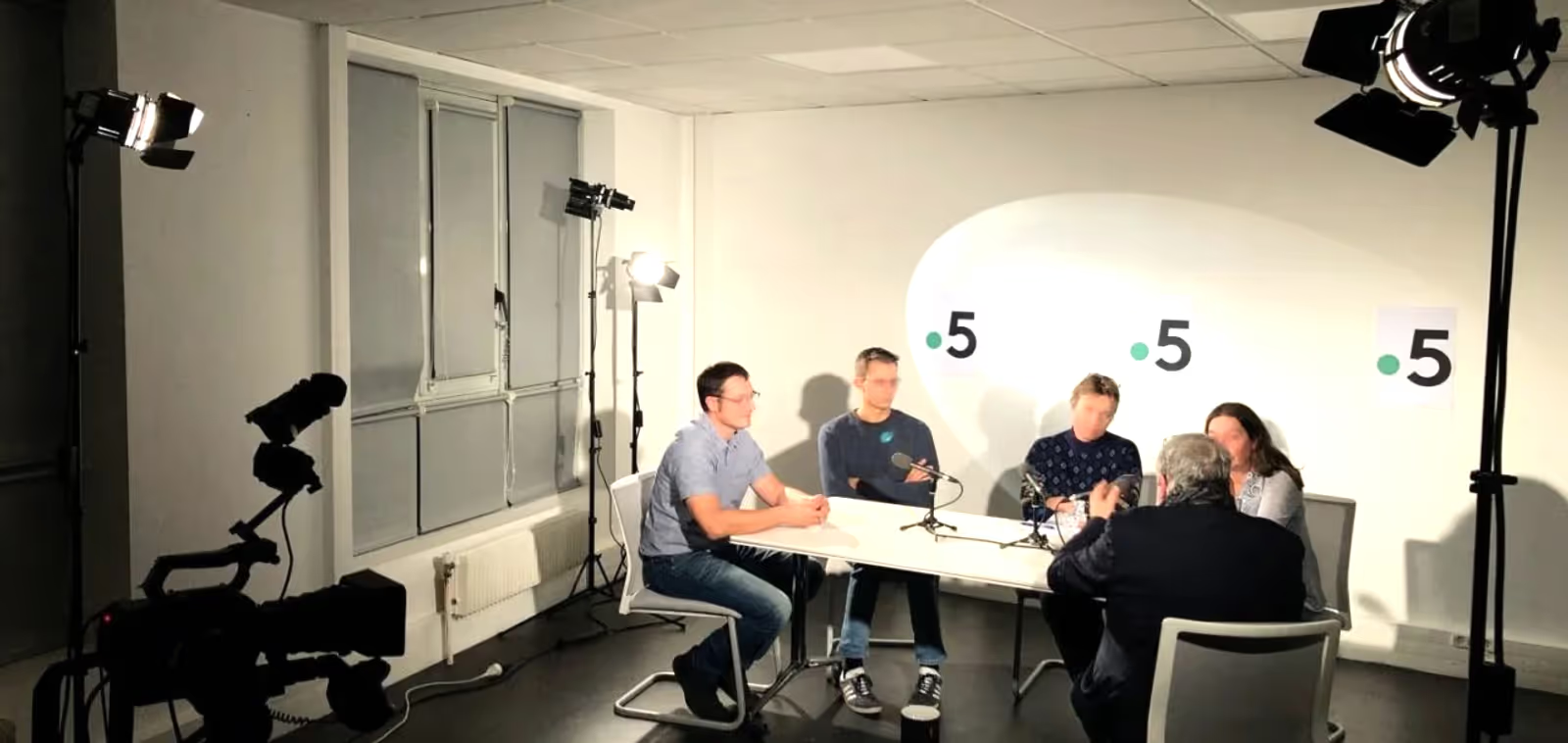
Filmed media training session in a TV studio

Our method

You are not the victim. You are in charge.

Theory is necessary but not enough. At IMT we film, we correct, and we do it again as per different media outlets. Interviews analysed. Improved, visible progress by the end of the session.

The principle

Try, get feedback, adjust, try again. You see your own progress on screen before the day is out.

Every interview is filmed, then reviewed and analysed with your trainer. You leave with a recording of your session and a method you can use again. The feedback is designed to encourage: we take the interview apart, adjust the tone, simplify a sentence and run it again until the message comes across.

A typical day

Six stages, from briefing to recording.

  1. Briefing

    Objectives, media context, sensitive issues. We prepare the session around your sector, your current news and the risks to your reputation.

  2. Key messages

    Three priority messages, with the facts and examples that back them up, and the bridging phrases that bring you back to them.

  3. First interview

    A TV, radio or press interview, whichever matters most to you, tough questions included, put to you by a working journalist.

  4. Video debrief

    Clarity, accuracy, posture, pace. We go through the recording together and pinpoint what needs to change.

  5. Second interview

    Just as demanding, with the corrections applied. Vital too: body language is analysed and corrected.

  6. Your recording

    You take away a recording of your interviews, and a method you can use again for your next appearance.

Who we train

The people whose words speak for an organisation.

Executives and managers

To lead is to be heard. A board presentation, a strategy seminar, an executive committee where every word counts: your voice has to carry a vision, frame a decision and bring people with you.

Through filmed role play and immediate feedback, you learn to turn an idea into a moment of conviction, to rally people around a shared direction, and to give the people you manage the confidence to speak up.
Political figures and diplomats

In politics and diplomacy, a single word can open a negotiation or wreck an agreement. Media training prepares elected officials, candidates, advisers and envoys for the toughest formats: live interviews, television panels, press briefings, hostile questions and verbal traps.

Barbara Gray, a bilingual TV journalist still working today, brings decades of experience in the biggest international newsrooms. She has put those questions hundreds of times herself, and knows exactly how they are built.

How we work

No more than six participants per trainer.

Individual modules last a minimum of half a day. Groups are limited to six participants; beyond that we split the class into separate workshops. One-to-one sessions are also available.

Where we train

In your offices, in a studio, or on neutral ground.

The mobile TV studio

The mobile TV studio

We work with cameraman Jean-Luc Valteau, who brings a mobile studio that sets up easily in your offices or boardroom. Lighting, cameras and microphones wired to a mixing desk, plus jingles and a monitor showing what is on screen, recreate the atmosphere of a TV studio. A room of about 70 square metres is enough.

Studio Ajer

Studio Ajer

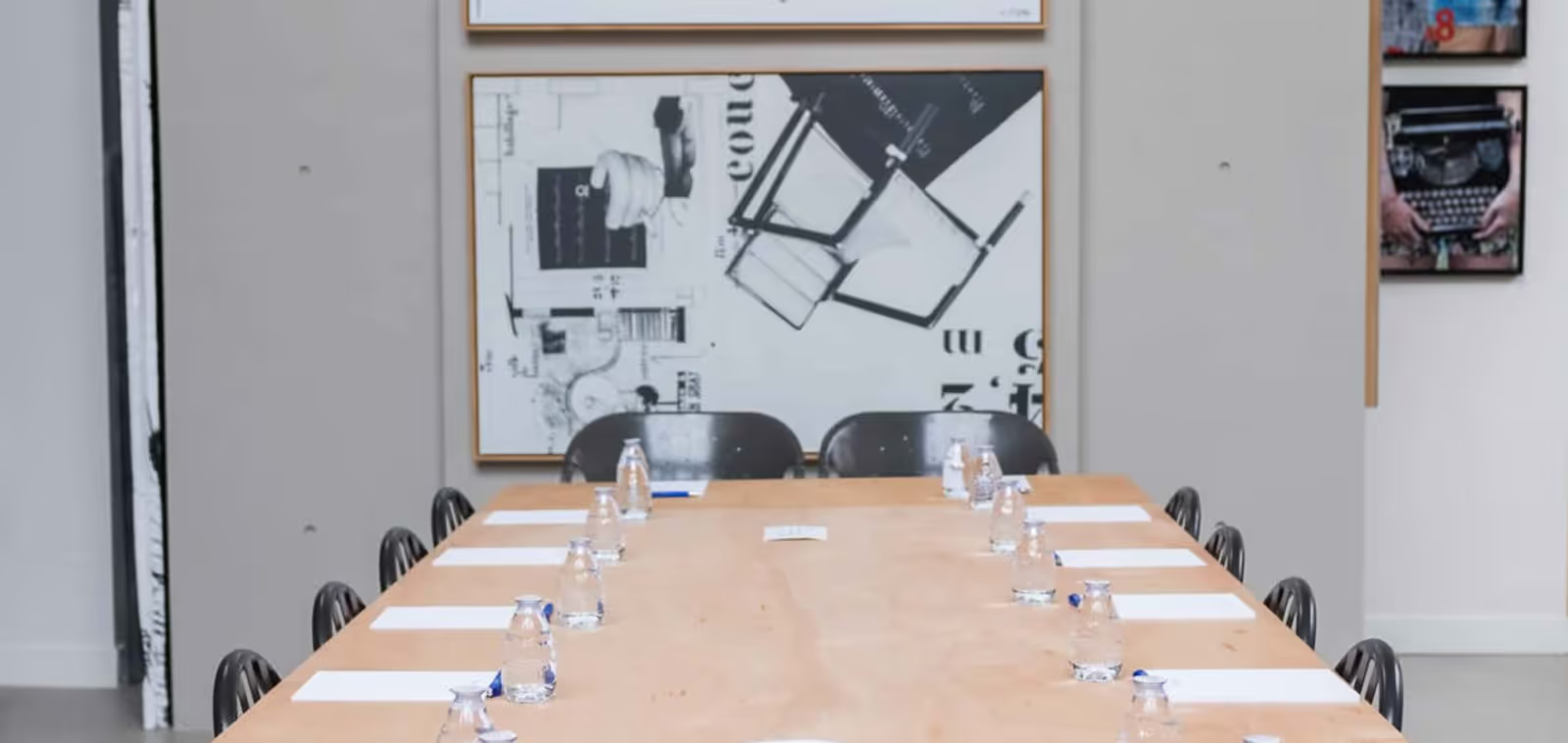
Most of our sessions take place in our clients' offices, but some call for neutral ground. One of our favourite venues is Studio Ajer, on the edge of Paris near La Défense: a former artist's studio, bright and spacious, with a garden for breaks when the weather allows, and breakfast or lunch laid on if you want it.

Something coming up?

Tell us what you are facing: an interview, a press conference, a board meeting, an ongoing crisis. We will come back to you with a format and a trainer.